Korean Bibimbap
Uitgelicht onder: Wereldwijde ideeën
A vibrant and nutritious Korean dish that combines rice, vegetables, and protein, all topped with a sunny-side-up egg and spicy gochujang sauce.
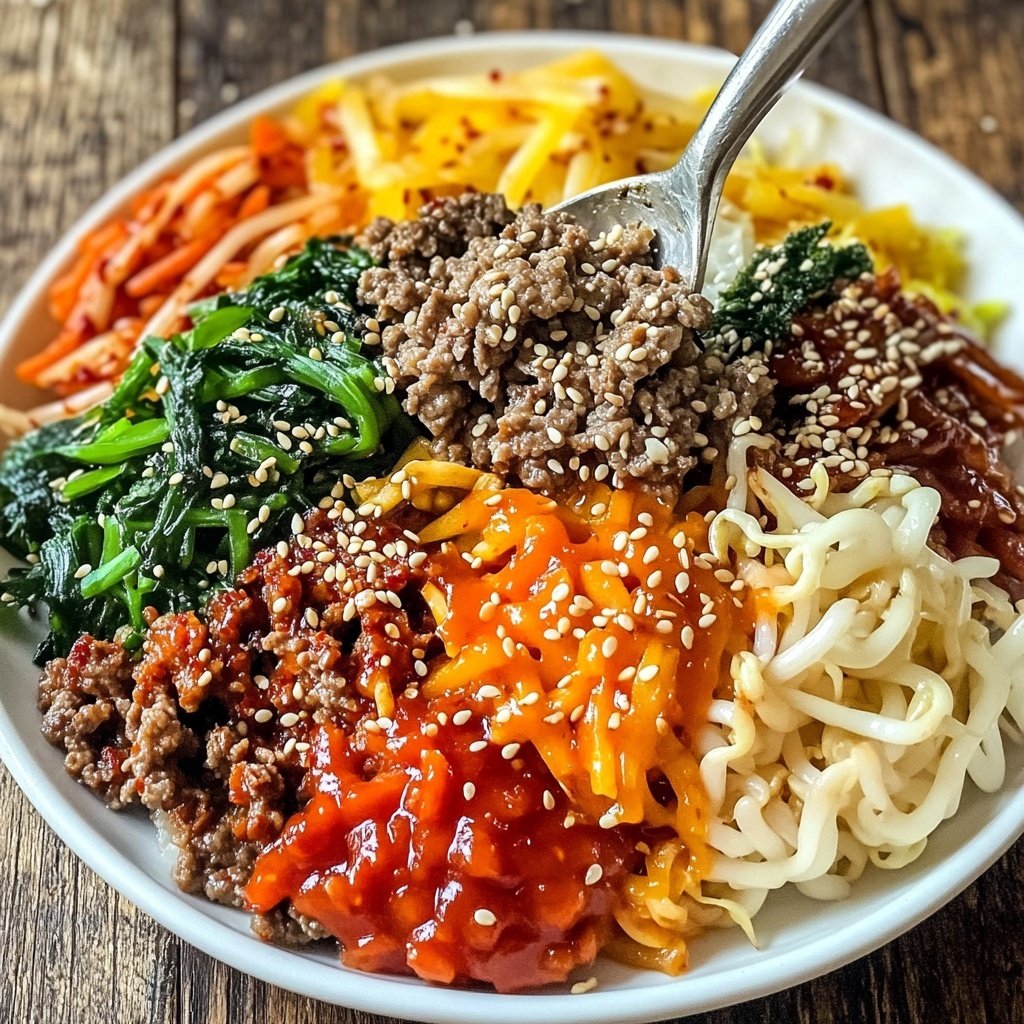
Korean Bibimbap is not just a meal; it's a colorful celebration of flavors and textures. This iconic dish brings together a harmonious blend of marinated vegetables, protein of your choice, and a spicy kick from gochujang, making it a satisfying and wholesome experience.
Why You'll Love This Recipe
- A harmonious blend of fresh vegetables and flavors
- Customizable with your favorite protein options
- Quick and easy to prepare, perfect for weeknight dinners
What is Bibimbap?
Bibimbap is a traditional Korean dish that translates to 'mixed rice.' It typically consists of a bowl of warm white rice topped with an assortment of sautéed and seasoned vegetables, meat, and often a fried egg. The vibrant colors and textures make it not only visually appealing but also a delightful culinary experience. Each ingredient is carefully prepared to retain its unique flavor and nutritional value, making bibimbap a well-rounded meal.
The origins of bibimbap can be traced back to the late 19th century, likely originating from a royal court dish. Over time, it has evolved into a popular meal enjoyed by people of all ages in Korea and beyond. Traditionally, bibimbap is served in a hot stone bowl, which creates a crispy layer of rice at the bottom, enhancing the overall flavor and texture. Whether enjoyed at home or in a restaurant, bibimbap is a beloved comfort food.
Health Benefits of Bibimbap
One of the standout features of bibimbap is its nutritional profile. This dish is packed with a variety of vegetables, each contributing essential vitamins, minerals, and antioxidants. Spinach provides iron, while carrots are rich in beta-carotene, promoting good vision and skin health. The inclusion of mushrooms adds a unique umami flavor along with immune-boosting properties, making bibimbap not just delicious but also a nourishing choice.
Moreover, bibimbap can be easily customized to fit various dietary preferences. Whether you're vegetarian, vegan, or a meat lover, you can adjust the ingredients to suit your needs. The use of gochujang, a fermented chili paste, not only enhances the dish's flavor but also offers health benefits such as improved digestion and anti-inflammatory properties. This makes bibimbap a wholesome option for anyone seeking a balanced meal.
Tips for the Perfect Bibimbap
To achieve the best flavor in your bibimbap, be sure to use fresh, high-quality ingredients. The vegetables should be vibrant and crisp, and the rice should be cooked perfectly to create a fluffy base. Consider using short-grain rice, which is commonly used in Korean cuisine, as it has the right texture to hold the toppings together. Additionally, using a hot stone bowl can elevate the experience by providing a delightful crispy rice layer.
Don't hesitate to experiment with different proteins and toppings. While traditional bibimbap often features beef or other meats, tofu, chickpeas, or even grilled chicken can be delicious alternatives. You can also add toppings like kimchi or pickled vegetables for extra flavor. Finally, remember to mix everything thoroughly just before eating to ensure that all the flavors meld together beautifully.
Ingrediënten
Gather all the ingredients before you start cooking to ensure a smooth preparation process.
Ingredients for Bibimbap
- 2 cups cooked rice
- 1 cup spinach, blanched
- 1 cup carrots, julienned
- 1 cup zucchini, julienned
- 1 cup shiitake mushrooms, sliced
- 2 eggs
- 2 tablespoons gochujang (Korean chili paste)
- 1 tablespoon sesame oil
- 1 tablespoon soy sauce
- 1 teaspoon sesame seeds
- Salt to taste
Feel free to substitute vegetables or proteins based on your preference.
Bereidingswijze
Follow these steps to create a delicious and visually appealing Bibimbap.
Prepare the Vegetables
In a skillet, heat sesame oil over medium heat. Sauté the carrots, zucchini, and shiitake mushrooms separately until tender. Season each with a pinch of salt. Set aside.
Cook the Eggs
In the same skillet, fry the eggs sunny-side up until the whites are set but the yolks are still runny.
Assemble the Bibimbap
In two bowls, divide the cooked rice as the base. Arrange the sautéed vegetables and spinach on top of the rice. Place a fried egg on each bowl.
Add Gochujang and Serve
Drizzle gochujang and soy sauce over the top. Sprinkle with sesame seeds. Mix everything together before eating.
Enjoy your homemade Korean Bibimbap with a side of kimchi!
Professionele Tips
- For an authentic taste, try using Korean short grain rice and adjust the amount of gochujang to your spice preference.
Serving Suggestions
Bibimbap is incredibly versatile and can be enjoyed as a standalone meal or paired with side dishes for a more elaborate dining experience. Traditional Korean side dishes, known as banchan, such as kimchi or pickled radishes, complement the flavors of bibimbap perfectly. You can also serve it with a light soup to create a comforting meal.
For a fun twist, consider serving bibimbap in a communal style, allowing guests to create their own bowls. Set up a variety of toppings and sauces, and let everyone customize their bibimbap to their liking. This interactive dining experience not only makes for a delicious meal but also encourages conversation and connection.
Storage and Reheating
If you have leftovers, bibimbap can be stored in an airtight container in the refrigerator for up to three days. To maintain the quality of the ingredients, it's best to keep the gochujang and other sauces separate until you're ready to eat. When reheating, you can use a microwave or a skillet to warm the rice and vegetables gently, ensuring they don’t dry out.
For a quick and easy meal the next day, consider making a bibimbap-style stir-fry. Simply add your leftover ingredients to a hot skillet, toss in an egg, and stir-fry until heated through. This not only saves time but also gives you a new twist on the classic dish.
Vragen Over Recepten
→ Can I make Bibimbap vegetarian?
Yes! Simply omit the eggs and use tofu or additional vegetables as the protein.
→ What other proteins can I use?
You can use beef, chicken, or even seafood like shrimp for variation.
→ Can I prepare the ingredients in advance?
Absolutely! You can prepare the vegetables and rice a day ahead and store them in the fridge.
→ What can I serve with Bibimbap?
Bibimbap pairs well with a side of kimchi or pickled vegetables for added flavor.
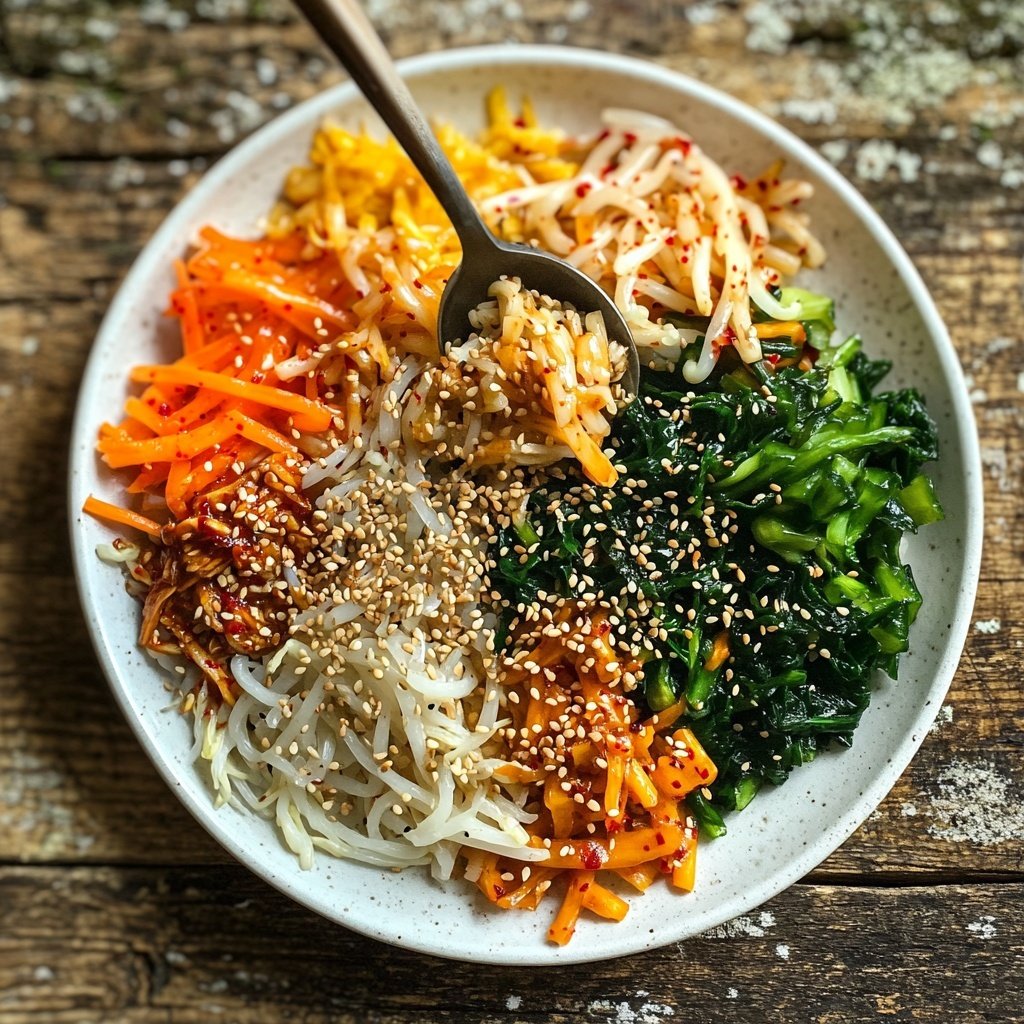
Korean Bibimbap
Gemaakt door: Verity Langdon
Recepttype: Wereldwijde ideeën
Vaardigheidsniveau: Intermediate
Eindportie: 2 servings
Wat je Nodig Hebt
Ingredients for Bibimbap
- 2 cups cooked rice
- 1 cup spinach, blanched
- 1 cup carrots, julienned
- 1 cup zucchini, julienned
- 1 cup shiitake mushrooms, sliced
- 2 eggs
- 2 tablespoons gochujang (Korean chili paste)
- 1 tablespoon sesame oil
- 1 tablespoon soy sauce
- 1 teaspoon sesame seeds
- Salt to taste
Stappen
In a skillet, heat sesame oil over medium heat. Sauté the carrots, zucchini, and shiitake mushrooms separately until tender. Season each with a pinch of salt. Set aside.
In the same skillet, fry the eggs sunny-side up until the whites are set but the yolks are still runny.
In two bowls, divide the cooked rice as the base. Arrange the sautéed vegetables and spinach on top of the rice. Place a fried egg on each bowl.
Drizzle gochujang and soy sauce over the top. Sprinkle with sesame seeds. Mix everything together before eating.
Extra Tips
- For an authentic taste, try using Korean short grain rice and adjust the amount of gochujang to your spice preference.
Voedingswaarde (Per Portie)
- Calories: 500 kcal
- Total Fat: 20g
- Saturated Fat: 4g
- Cholesterol: 200mg
- Sodium: 700mg
- Total Carbohydrates: 70g
- Dietary Fiber: 5g
- Sugars: 5g
- Protein: 15g